
Tulane University professor creates AI-driven SMART-pred platform that aims to transform public health surveillance
A Tulane University research team is developing an artificial intelligence platform designed to help public health professionals spot disease risks earlier, with potential applications in maternal health, cancer surveillance and infectious disease monitoring.
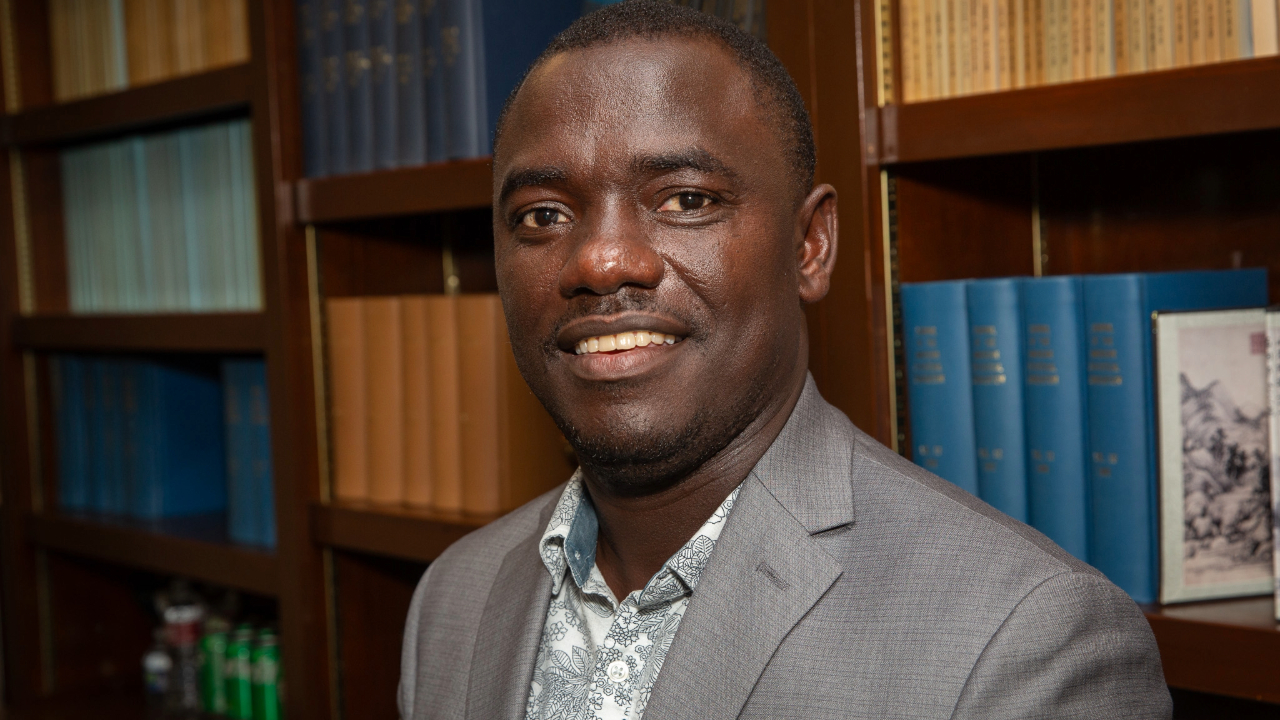
The project, known as SMART-pred, is led by principal investigator Samuel Kakraba, assistant professor of biostatistics and data science at the Celia Scott Weatherhead School of Public Health and Tropical Medicine and a faculty affiliate of the Connolly Alexander Institute for Data Science (CAIDS).
The initiative recently received support through a joint seed grant program from CAIDS and the Weatherhead School focused on advancing AI and machine learning in public health research.
SMART-pred is designed to analyze large volumes of health data and identify patterns that signal disease risk or emerging public health concerns before those trends are visible through traditional surveillance systems. For instance, using SMART-pred, researchers could analyze specific biometrics — such as body temperature, heart rate, and respiratory patterns — from large populations to detect unusual trends and help identify potential disease outbreaks early.
SMART-pred can be used by health professionals with no special training and has the potential to be applied across a wide range of health challenges. In maternal health, it could help identify patients at higher risk for complications. In cancer surveillance, it could detect unusual increases in disease incidence across specific communities. For infectious diseases, it could help forecast outbreaks and guide early intervention.
SMART-pred grew out of earlier work by Kakraba and collaborators on handwriting-based Alzheimer’s screening. In a recently published case study in JMIR Aging, the platform’s top-performing model achieved 91% test accuracy, prompting the team to explore how the approach could be used on a larger scale.
“This is something we can definitely adapt to a broader audience and a broader community,” Kakraba said.
SMART-pred is also designed to track outcomes across different populations and highlight disparities in real time, helping decision-makers allocate resources more effectively.
The project brings together expertise from across disciplines, including public health, data science and medicine, and includes collaboration with the Louisiana Department of Health. Through the seed grant, CAIDS is also supporting the effort with computing infrastructure and student engagement opportunities.
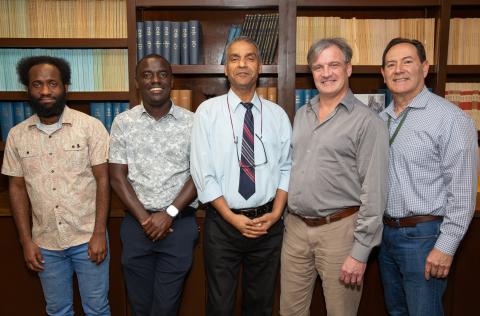
In developing SMART-pred, Kakraba worked alongside faculty members Sudesh K. Srivastav and Jeffrey G. Shaffer, doctoral student Edmund F. Agyemang, and former master's student Han Wenzheng, all from the Department of Biostatistics and Data Science in the School of Science and Engineering. The team is currently expanding SMART-pred's capabilities, validating it across multiple disease areas and working toward HIPAA compliance to support real-world implementation.
“SMART-pred represents a new model for public health… one that is AI-driven, explainable, affordable and accessible to everyone,” Kakraba said. “I’m so thankful to CAIDS and the Weatherhead School for supporting our work with a seed grant, so we can bring SMART-pred into the real world.”